If you read this post, you’ll know I’ve launched a new series called hidden Brighton walks. Each walk involves snooping around the backstreets of a different Brighton and Hove neighbourhood, away from crowds. You can walk the routes in any season, or when the mood takes you. They’re self-guided, with fun facts to read along the way and a map including useful addresses.
So far, we’ve explored Seven Dials, Brunswick Town in Hove and hilly Hanover. Today, we’re heading to Kemptown, which runs the distance from Black Rock near Brighton Marina to just short of the Palace Pier.
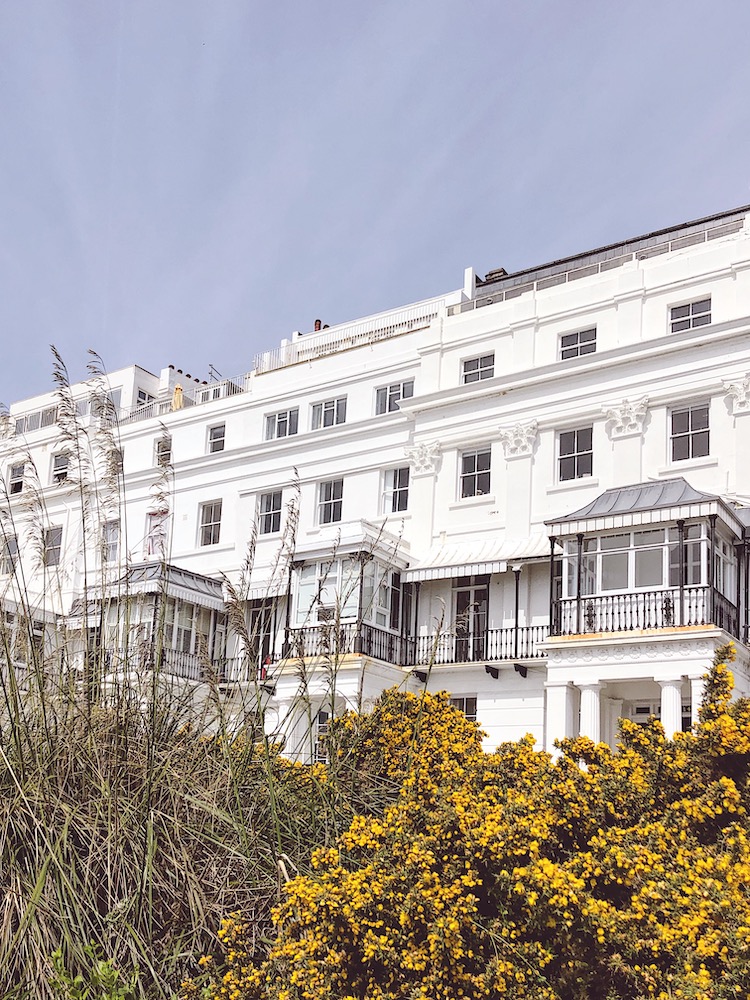
It’s an area of grand squares and crescents lined with whitewashed Regency townhouses, leafy private gardens, and a contrasting buzzy centre around St James’s Street, long-associated with LGBTQ culture, where rainbow flags adorn many of the bars, clubs, cafes, and B&Bs. Follow me!
Hidden Brighton walk: KempTown
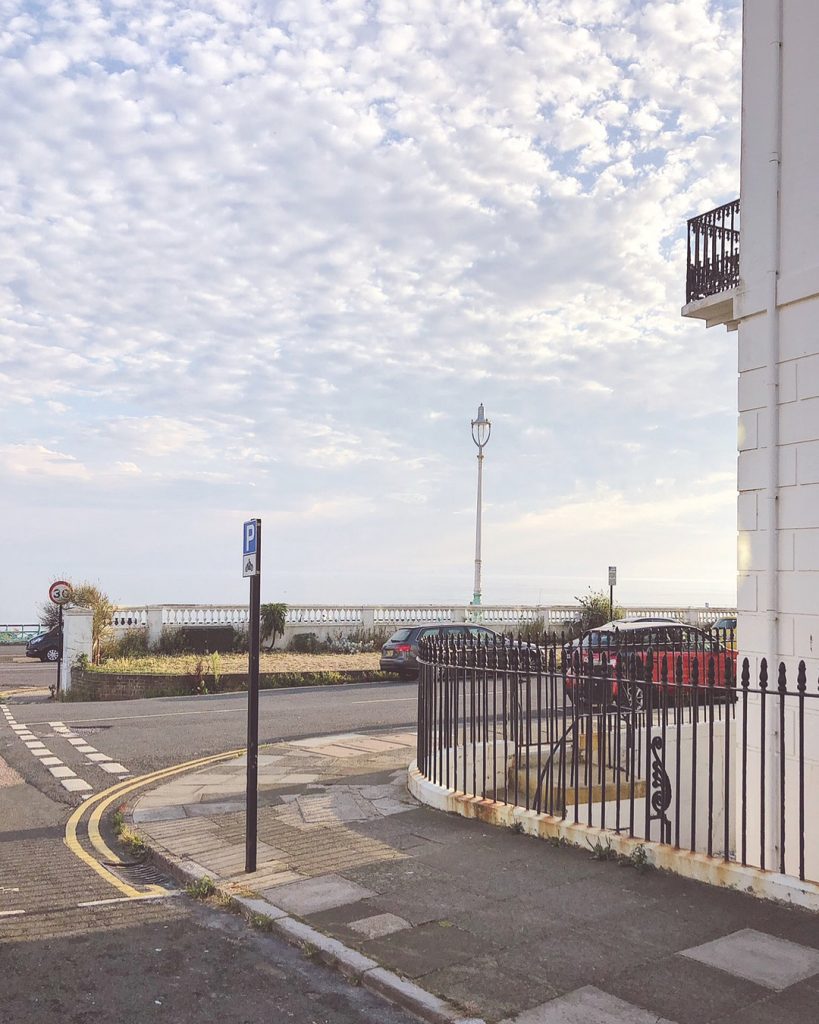
You can do this walk either way around. Today, we’re starting near the seafront on Lewes Crescent in the Kemp Town Estate, which culminates in Sussex Square, cut in half by Eastern Road.
Quick history lesson: The Kemp Town Estate in modern Kemptown was the first upper-class housing development built in Brighton for the fashionable rich. It’s named after its designer, the architect, Sir Thomas Read Kemp. The boundary is hard to define but roughly it runs from Lewes Crescent west to Rock Street.

Head north up Lewes Crescent towards Eastern Road, with beautiful townhouses on your left. I bet you can’t resist imagining life in one?
Fun fact: At the south end of Lewes Crescent, look up on the right day and you might spot Australian singer, Nick Cave and his fashion designer wife, Susie Cave, hanging out on their balcony.
Moving on, you’ll notice the houses are set around a central private garden. This is known as the Kemp Town Enclosures which only those who live here have access to.
Fun fact: The Kemp Town Enclosures occasionally open to the public during Artists’ Open House weekend. They’re home to a tunnel that leads to the beach, said to have inspired the opening scene in Alice in Wonderland written by Lewis Carroll who stayed at 11 Sussex Square.
His time in the city is marked by a plaque – each year between 1874 and 1887 to see his Oxford University friend Henry Barclay and his sister Henrietta who lived in Park Crescent.

At the top of Lewes Crescent, cross over Eastern Road into Sussex Square. Most of the grand buildings on Sussex Square are now flats, but they were once all single-family homes, some sharing extensive gardens once accessible by a tunnel to the owner’s property.
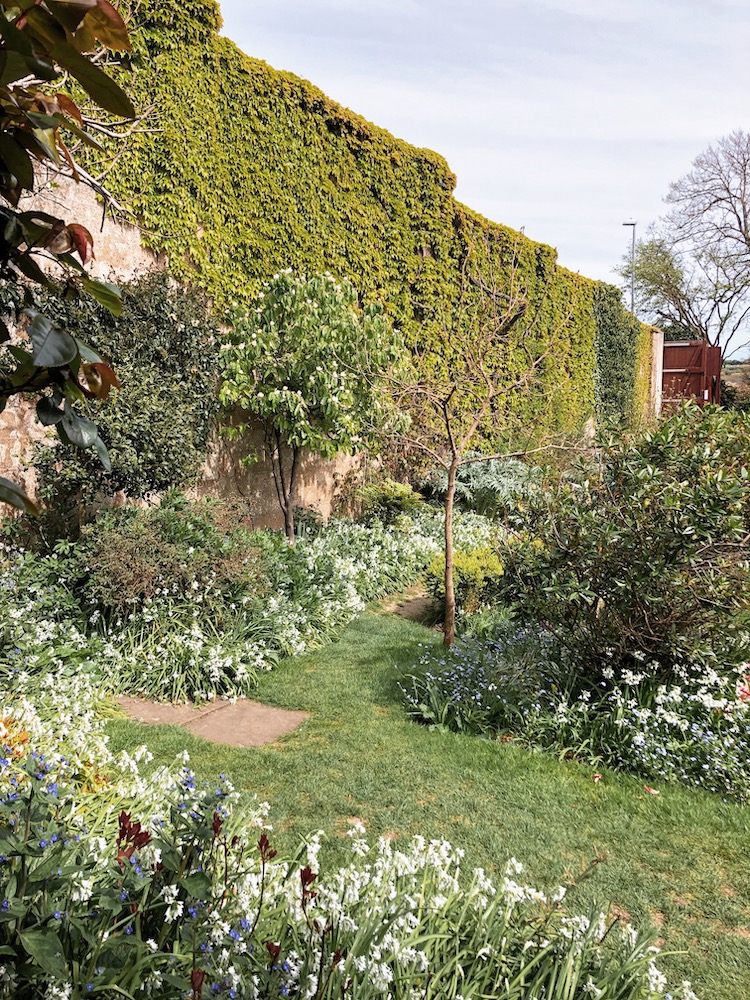
One of these communal gardens has been preserved. It was once part of a garden around three times the size that served 32 Sussex Square, a large townhouse owned by the founder of the Metropolitan Police force’s brother, who commissioned a ‘pleasure garden’ complete with tennis courts and a kitchen garden.
Today, it’s a unique community arts venue called the Secret Garden Kemp Town, the only garden of its type in the city, which is open most weekends in the summer.

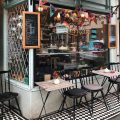
Back on Eastern Road at the junction with Church Place is an exclusive-looking establishment on the right with a dark-painted exterior and half-curtains. This is the home of cafe Marmalade, one of Brighton’s coolest cafes, its counter and shelves are a feast for the eyes, stuffed with sandwiches, cakes, heaped salads and gourmet gifts.
Insider tip: When you’re waiting for your coffee to brew, peek into Sussex Mews next door, with its beautiful flint cottages.

Turn away from the busy Eastern Road, and head south along Rock Street which bends right past one of my favourite restaurants in Brighton, a gastropub called Busby and Wilds, known for their burgers and great Sunday roasts.
You’ll also spot curious shops like Oriental Arts specialising in Chinese stationery like paper and brushes and David Ingledew Pianos, which often has a baby grand in the window.
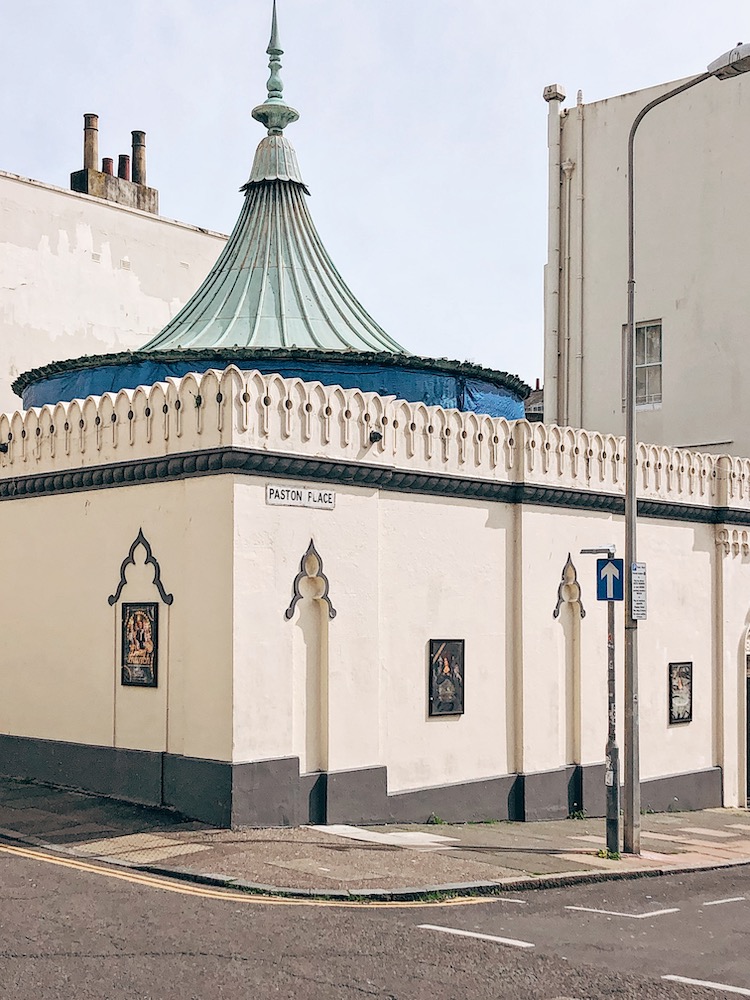
At the end of the street, turn left onto Eaton Place, then first right onto St George’s Road, another beautiful street of lovely buildings, past more little shops including a new place called The Bookend, a local publlisher of photo books, the colourful Suriya’s Kitchen, a minuscule Thai restaurant, next door but one to a distinctive oriental-style building.
Fun fact: Most people don’t know that this building was a former mausoleum. Today, it’s home to Proud Cabaret, the words ‘Bombay Bar’ above the side entrance a clue to one of its other past lives as a pub.
Traveller tip: Now’s a good time to duck south down a side street, to discover Millfield Cottages, one of Brighton’s secret streets, still so many locals don’t know of.
It’s lined with pastel-coloured homes and is named after a windmill that once stood near the bottom of Sudeley Place nearby.

St George’s a little further along on the right, is a beautiful old church usually open during the day for a browse. It’s also often used as a venue for evening gigs.
At this point, you reach Kemptown Village, named so for its community feel, and cluster of independent shops and cafe.
These include Portland for great coffee and imaginative toasties, Pizza Face for take-outs (I highly recommend the goat’s cheese and caramelised onion), and the Open Bakery for the city’s best croissants – so buttery and flaky – and Brighton’s famous Chewy Brown bread
Then there’s the smart local Kemptown Bookshop, not far from Butler’s Wine Cellar known for its big selection of local Sussex wines, and finally The Well, a laid-back taproom and shop filled with vintage furniture specialising in natural wine and craft beer.
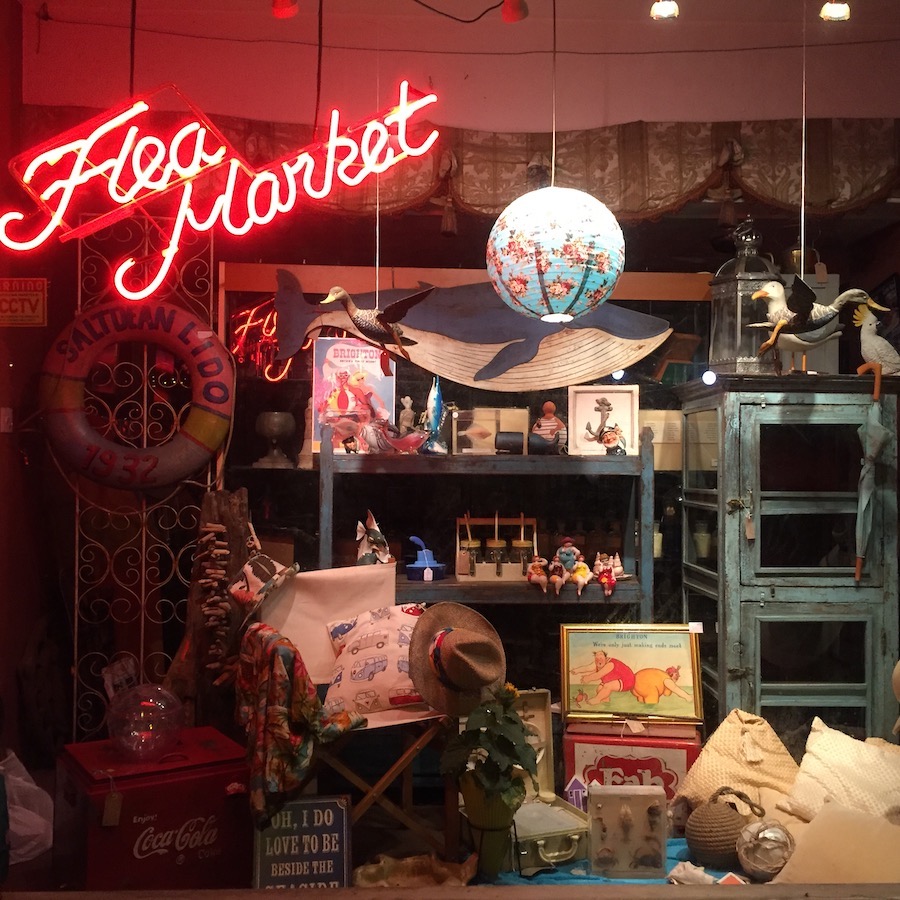
Follow St George’s Road as it bears left into Bristol Street and turns into Upper St James’s Street and you’ll eventually come to one of my favourite city emporiums, the Brighton Flea Market.
It’s an alternative, quieter option to the well-known Snooper’s Paradise in the North Laine which is epic but gets packed, especially at the weekend.
It’s conveniently located close to one of my favourite Brighton pubs, the brightly coloured Hand in Hand with its small and cosy curio-filled bar room which becomes the setting for Sunday jazz sessions.

You’ll find more interesting independent shops and cafes here like Moderne, specialising in rare 20th-century homewares and jewellery, before reaching the Black Dove, a cool and divey local favourite pub on the corner that does great cocktails and has an underground drinking den.

Eventually you reach St James’s Street, an area of eclectic cafes, bars, shops and interesting side streets to the seafront to explore.
Traveller tip: note Charles Street with its black-fronted flint houses that look plucked from Georgian London (pictured above).
From here, zig-zag your way up and down until you reach Brighton’s smallest tearoom on Marine Place.
With its small, quiet dining room, it’s the perfect place to regroup over a cup of tea and plan your next adventure around this crazy seaside city.
Thanks for reading! If you enjoyed this post, would you consider buying me a coffee?
New here? Head over to the Ellie & Co • A Far Out Travel Guide check-in desk for a welcome tour, join other curious travellers and subscribe by email or follow my stories on Instagram, Twitter or Facebook.