

The last time I went to Marrakech I spent a week avoiding all the obvious tourist traps. As it was my third trip to the Red City, today I felt it high time I pull together all my discoveries and insights into this handy week-long Marrakech itinerary to help with your travel planning. As my husband had never been, it includes the big sights too, timed around dodging the crowds and paired with quieter options nearby.
We visited in late February for his birthday, which is a great time to see Marrakech in winter, with far fewer tourists and the big sights calm enough to actually enjoy. Mornings were cool, but by lunchtime, we were sipping tea on sunny rooftops in t-shirts, and returning from dinner to a crackling fire lit in our room. After months of Brighton drizzle, I didn’t want to come home at all!
But we can’t deny that overtourism is a real issue in Marrakech, and the people who call the medina home live with the consequences. To ease the pressure, it’s best to avoid the peak months around spring, autumn and Christmas, as we did, and to tread lightly when you’re there: stay in one place rather than racing around, walk where you can, and spend your money with independents.
There’s no right or wrong way to spend your time in Marrakech. I’ve grouped each day by neighbourhourhood so you’re never rushing, but switch things around to suit your timeframe and travel style.
Where to stay in Marrakech
I recommend staying in a traditional riad in the medina, where you’ll be within walking distance of the souks, historic sights and plenty of places to eat. My favourite area is Mouassine, with its quieter lanes, independent shops and lovely little cafés. It’s central without feeling quite as hectic as the streets around Jemaa el-Fna.
We stayed at Dar Rbaa Laroub, a beautifully restored riad with a peaceful, plant-filled courtyard and rooftop terrace. It made the perfect base for exploring Marrakech on foot. If it’s booked up, I’d happily stay at any one of these alternative options.
My Marrakech itinerary at a glance
| Day | Area | Highlights |
| 1 | Arrival | Riad welcome, rooftop mint tea, first look at Jemaa el-Fna from Café de France, dinner at Maison Reine |
| 2 | North medina | Le Jardin Secret, Souk Semmarine and the craft souks, Ben Youssef Medersa, Maison de la Photographie, Dar Bellarj, lunch at Café des Épices, dinner at Le Jardin |
| 3 | Gueliz | Jardin Majorelle, Berber Museum, Musée Yves Saint Laurent, lunch at Amal, Sidi Ghanem design district, aperitif at Grand Café de la Poste, dinner at +61 |
| 4 | Cacti and the Kasbah | Cactus Thiemann, lunch at La Famille, El Badi Palace, Riad Yima, dinner at L’Mida |
| 5 | South medina | Bahia Palace, the Mellah, Saadian Tombs, lunch at Snack Grand Atlas, Koutoubia, hammam, sunset at Kosy Bar, dinner at Naima |
| 6 | Atlas Mountains | Kasbah Telouet, Aït Benhaddou, overnight at Kasbah Tebi |
| 7 | Home | Gas Haven film set |
Only have three days in Marrakech?
We stayed a week, but if you’re short on time and have never been before, these are the days I’d keep: Day 2 for the souks and the north medina, Day 3 for Jardin Majorelle and Gueliz and Day 5 for the palaces, the Mellah and the Saadian Tombs. Make time for a first look at Jemaa el-Fna from the roof of Café de France (Day 1), so you don’t miss the square.
Day 1: Arriving in Marrakech
We land at Marrakech Menara in the early evening. The airport is only 15 minutes from the medina, and a driver booked through our riad is waiting. Cars can’t get into the medina’s narrow lanes, so our driver drops us at the edge of the old city.
The cacophony of noise hits us the moment we open the door: mopeds buzzing and honking as they squeeze past, stallholders calling out to passers-by, and somewhere in the distance, the call to prayer rising over the rooftops.
A porter loads our bags onto a handcart and sets off at speed, shouting ‘balak, balak!’ (watch out!) to clear a path through the crowds. We hurry after him through a maze of terracotta-coloured alleys, ducking under awnings and dodging mopeds. I’ve no idea which way we’re going, and it already feels like the adventure has begun.
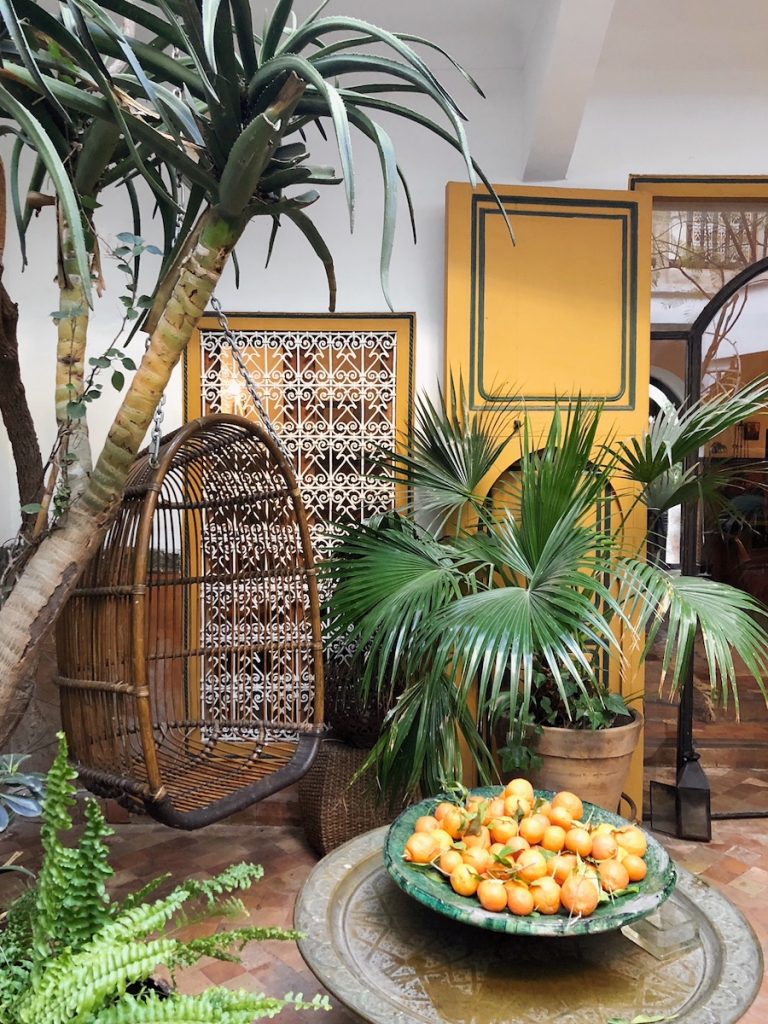
We arrive at Dar Rbaa Laroub in the elegant neighbourhood of Mouassine, push open a heavy wooden door into a plant-filled courtyard with a cane swing chair, and the noise of the city disappears. Jazz is playing softly inside and the French owner, Jean-Noël, greets us with a glass of red wine in hand.
We drop our bags in our cosy room – with a fireplace! – and head to the roof terrace for our first sip of sweet, hot mint tea, as the light fades over the rooftops. Eager for a peek at Jemaa el-Fna, we head to the roof of Café de France, the oldest on the square, to soak it up. Smoke curls up from the food stalls below and the drums start up as the square comes alive.

To celebrate our arrival, we wander back through the souks towards Mouassine for dinner at Maison Reine, a rooftop restaurant most visitors haven’t found yet. The terrace is breezy and South of France-style, in pale blue and white and shaded by olive trees, and after the noise of the square it feels like exhaling.
The food is fresh, sunny Mediterranean: we share smoky aubergine with labneh and a tomato tart, and finish with a cream-filled chouquette. Downstairs, there’s a concept store selling pottery and embroidered linen shirts, worth a browse on the way out.

Day 2: The north medina
After a rooftop Moroccan breakfast of honey drizzled crepes, fruit, yogurt and coffee, we wander five minutes to Le Jardin Secret, a restored 19th-century riad garden in Mouassine. It’s popular, but rarely feels crowded. Its two gardens, one traditional Islamic and one planted with exotic species, are cool and calm. I climb the tower for a view across the rooftops.
When we hit the souks at 10am, the lanes are still cool and quiet; shopkeepers sweeping their doorsteps and rolling up shutters.
When it starts to get busier, we head off the main thoroughfare through Souk Semmarine, the most famous market area, into the quieter craft souks. In Souk Haddadine, hammers ring on metal as blacksmiths shape lanterns. In Souk des Teinturiers, skeins of dyed wool hang overhead in saffron, indigo and red.
After haggling for some brass candle holders, we reach Ben Youssef Medersa, a 16th-century Quranic school with a breathtaking courtyard: zellige tiles, carved cedar and lace-like stucco reflected in a long pool. It’s one of the most visited sights in the city, and important to arrive early before the tour groups descend.
Around the corner, we lose ourselves in the quiet Maison de la Photographie, home to a collection of historic photographs of Moroccan life, from the late 19th century onwards. It sees a fraction of the visitors of its famous neighbour and worth a visit for the setting alone in a beautiful historic three-storey merchant’s house with a lovely roof terrace.

From here, we wander down a quiet lane and stumble on Dar Bellarj, a former stork hospital turned cultural foundation. Bellarj means “stork” in Arabic, and the birds have long been revered in Morocco. Few visitors find their way here, so we browse an exhibition of black-and-white photographs of old Marrakech in peace.
Afterwards, we wander north along Route Bab el Khemis, where carts are piled high with glossy tangerines and strawberries, and stop for a fresh sugar cane juice that costs next to nothing. We’re the only tourists in sight.
By lunchtime, we’ve reached Rahba Kedima, the old spice square, where we climb the narrow stairs of Café des Épices, a fixture on the spice square since the mid-2000s, with a rustic and relaxed feel and kilim-covered armchairs.
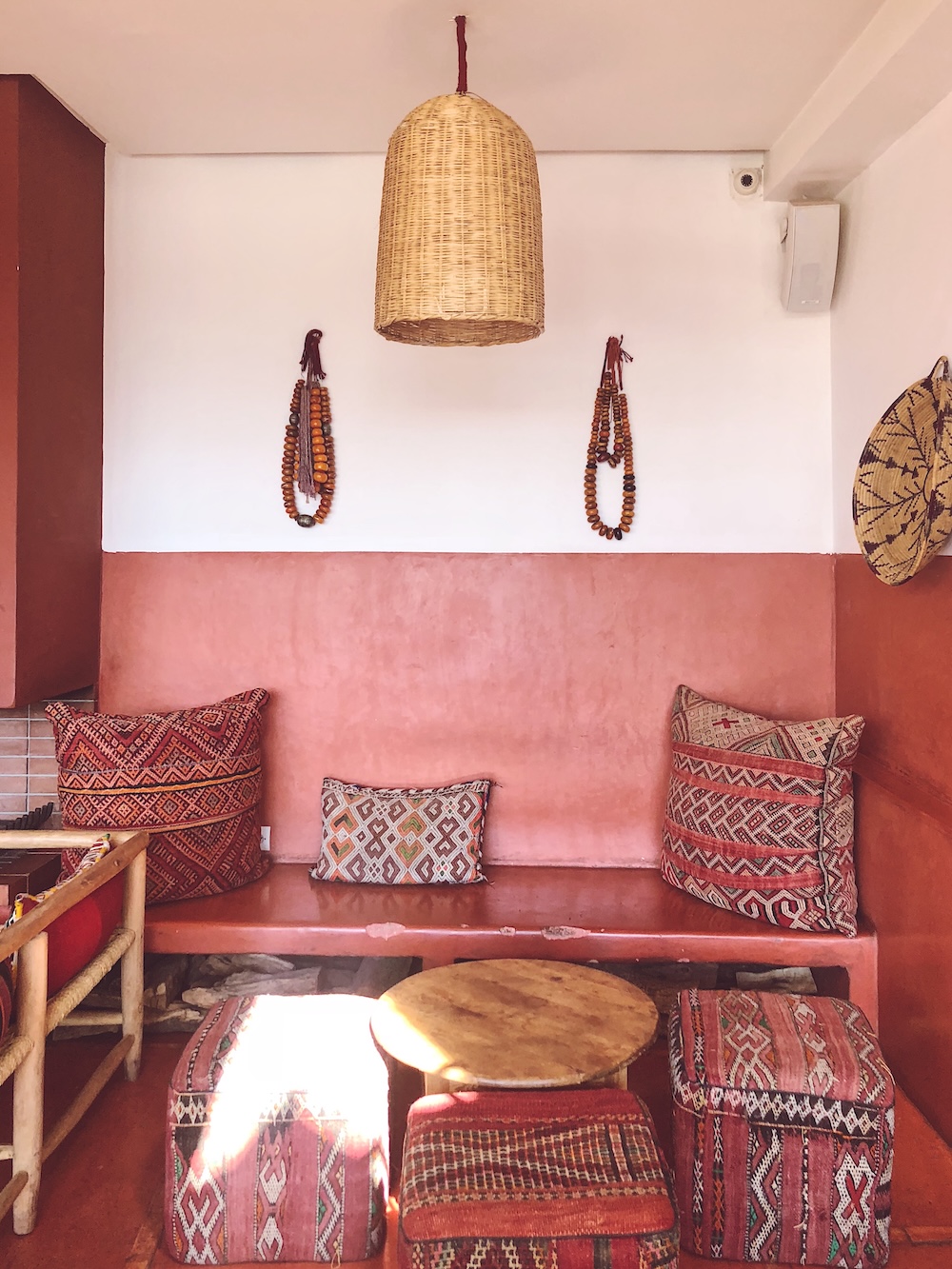
Over a felafel sandwich and fresh orange juice, it’s fun to watch life playing out below; stallholders sitting among baskets, straw hats and pyramids of spices, and on a clear day the Atlas Mountains on the horizon.
Back at Dar Rbaa Laroub, we spend the hottest part of the afternoon curled up with books on the roof terrace, sipping sweet mint tea and listening to the birds and the call to prayer drifting over the walls. As the light softens, we head to Le Jardin for dinner.
This cool spot is tucked away in the souks behind a heavy wooden door, and from the street you’d never guess what’s inside: a 16th-century house built around a courtyard tiled floor to ceiling in emerald green, shaded by banana trees and palms. There’s a retro, 1960s feel to the furnishings, and a little kaftan boutique upstairs to browse.
By night, the whole place glows with candlelight. We sit at a table in the courtyard and eat Moroccan classics, pastilla and a chicken tagine with olives, while the palms rustle overhead.
Day 3: Gueliz, gardens and design
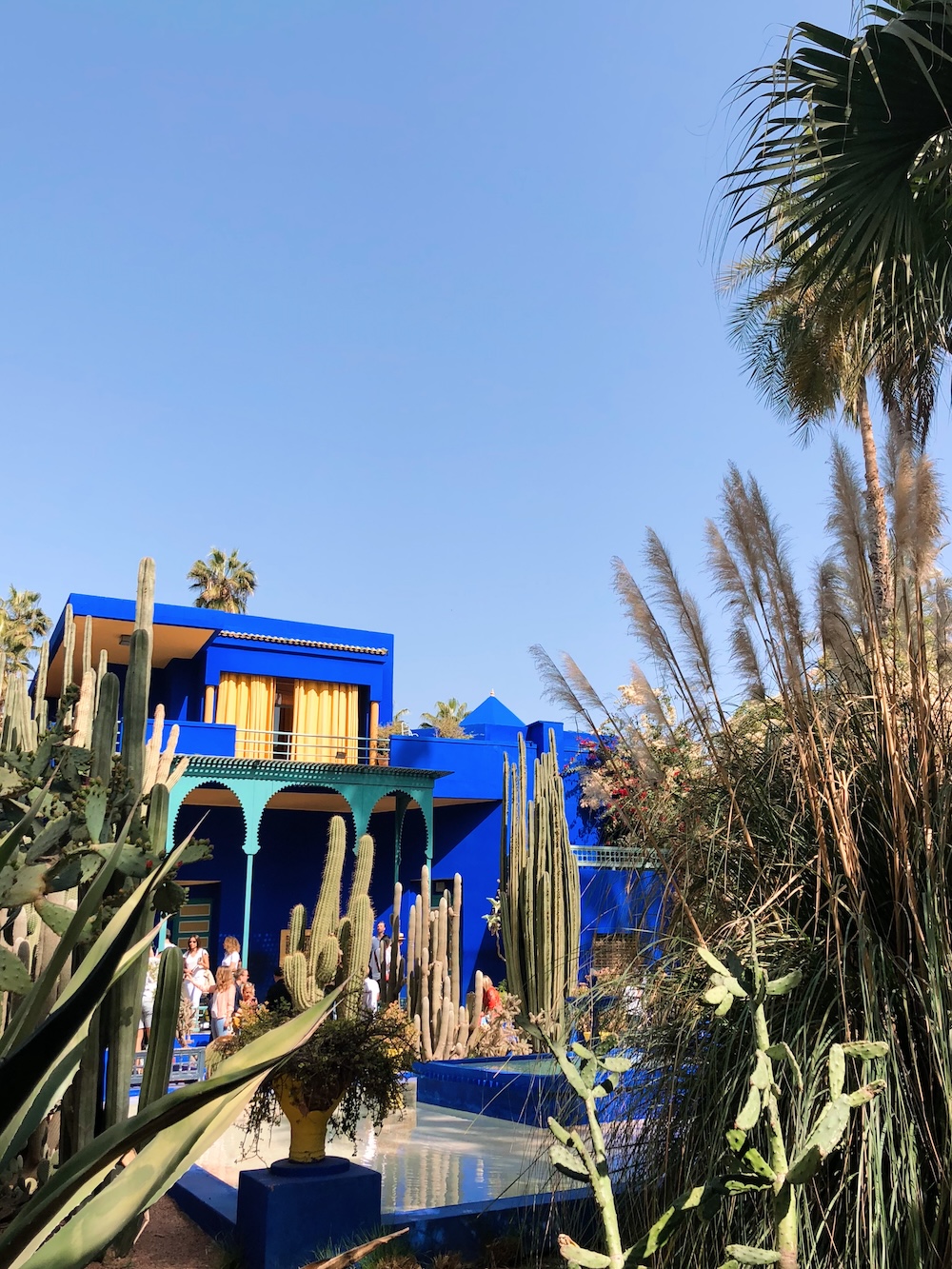
We take a taxi to Jardin Majorelle in Gueliz, arriving right at opening time, while it’s still quiet enough to hear the birds. The cobalt-blue villa glows against the palms and bamboo. When we leave around 11am, the queue is snaking around the block, so book tickets ahead; entry is by timed slot.
Don’t race straight back to the medina. Inside the villa is the Berber Museum, a small, beautiful collection of Amazigh jewellery, textiles and crafts, and next door, the Musée Yves Saint Laurent traces the designer’s love affair with the city. Together with the garden, they offer three different perspectives on Marrakech’s creative history.
It feels good to have lunch at Amal, a non-profit restaurant that trains disadvantaged women to be cooks. We eat on the shady terrace, choosing from a short menu of home-style Moroccan dishes that changes daily: think slow-cooked tagines, fresh salads and, on Fridays, the traditional couscous.
Gueliz feels like a different city from the medina, with wide, tree-lined avenues, pavement cafés and a slower pace of life. After lunch, we take a short taxi ride north to Sidi Ghanem, an industrial zone that has quietly become Marrakech’s design district. Behind its plain warehouse fronts are designers’ workshops, showrooms and concept stores selling ceramics, candles, textiles and furniture. I spend most of the time imaginging what I’d buy if I had a Moroccan apartment.
In the early evening, we head back into Gueliz for an aperitif on the terrace at Grand Café de la Poste, a 1920s colonial post office turned brasserie before dinner at Australian-run +61, a few streets away. It brings a breezy dose of Sydney style to the neighbourhood: moss-green banquettes, blush-pink marble tables and brass wall lights, all made by local artisans. The owner welcomes us like old friends, and the food is relaxed sharing plates, with bread, pasta and cheese made in-house.

Day 4: Cacti and the Kasbah
After breakfast, we feel like getting out of Marrakech, so it’s a taxi ride 10km north of the city to Cactus Thiemann, the nursery that supplies Majorelle’s cacti and one of my favourite unique things to do in Marrakech. Rows of cacti stretch away in every shape and shade of green, with not a queue in sight.
Magda, the founder’s daughter, leads the tours, and her stories are half the pleasure: her father arriving in Morocco in the 1960s, and the 80-year-old cactus that now towers over her.
Plan ahead: Cactus Thiemann is open Monday to Saturday, but visits are now by reservation only, so book by email or WhatsApp before you go. Entry is 120 dirhams, and you can reserve a seat on their free shuttle bus. It closes for most of August.
Back in the medina, lunch is at La Famille, a female-run vegetarian restaurant behind an easy-to-miss door on Riad Zitoun el Jdid. Seats fill a leafy garden courtyard, salads look like works of art and there’s a little boutique of brass mirrors and ceramics to browse after lunch.
A short walk away is El Badi Palace, the ruins of a 16th-century sultan’s palace. The vast courtyard, its sunken gardens and the crumbling walls are dotted with storks’ nests. It’s so vast that it never feels crowded.
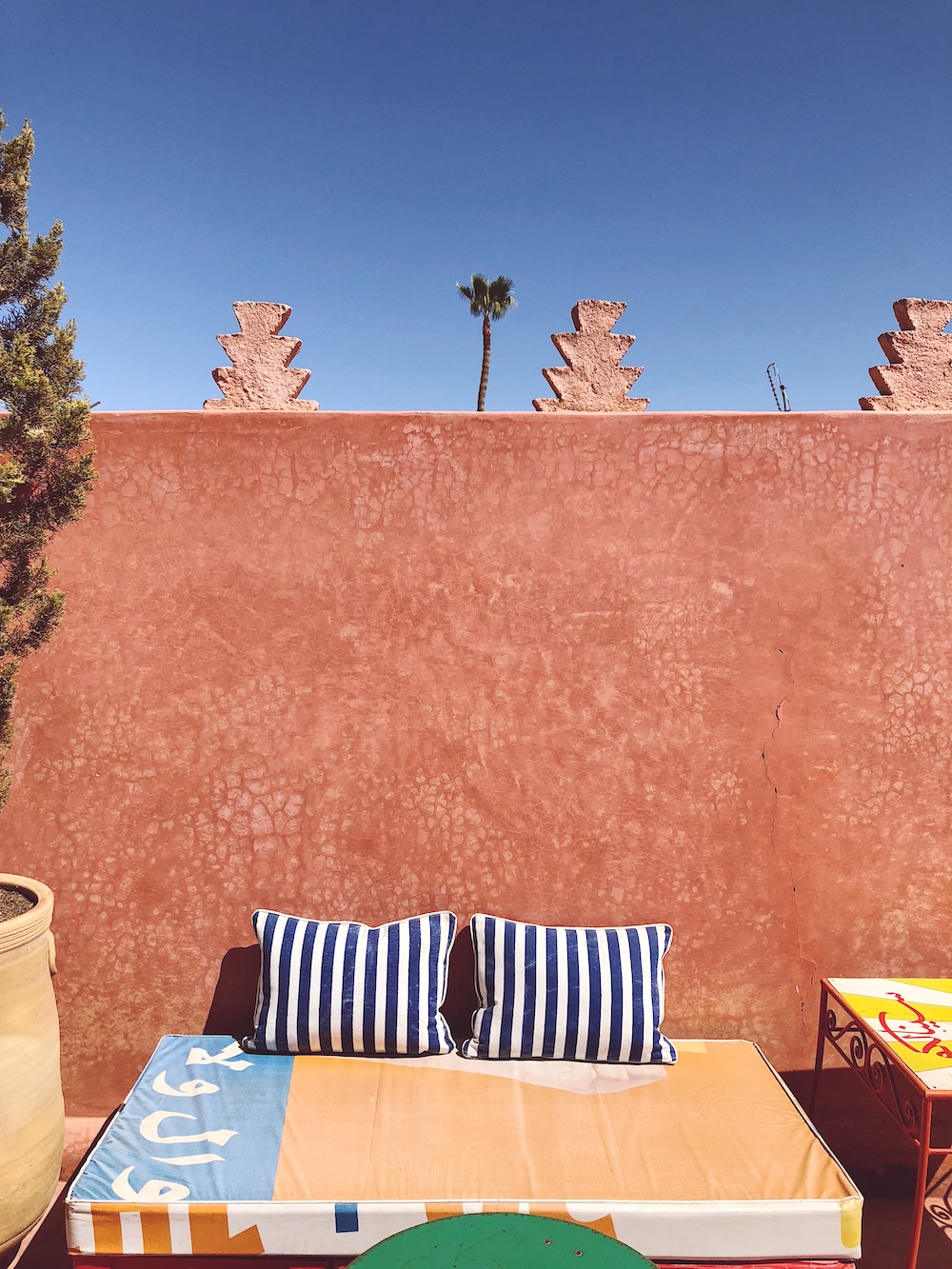
We stop at the riad to freshen up and rest our feet before heading out again. First stop, Riad Yima, just off Rahba Kedima: artist Hassan Hajjaj’s gallery, shop and tea terrace. It’s tucked down an alley two minutes from Jemaa el-Fna, yet wonderfully hushed. We sip mint tea on the roof, surrounded by his bright portraits.
Next, I have to confess, I give in to the lure of Nomad overlooking Rahba Kedima, the medina’s most Instagrammed rooftop, for a mocktail sundowner under the reed pergola among potted oleanders. It’s stunning, but absolutely heaving, so for dinner we head to smaller, less hectic L’Mida opposite, where chef Narjisse Benkabbou gives Moroccan classics a fresh, modern twist. Think: Berber gnocchi and lamb chops, washed down with a rose and cardamom mocktail.
Day 5: The south medina, palaces and tombs
We arrive at Bahia Palace, one of Marrakech’s most visited sights, as it opens, to beat the tour groups and find its courtyards still quiet. Built for a grand vizier in the late 19th century, it unfolds room after room of painted cedar ceilings, intricate carved plaster and tiled floors, opening onto courtyards shaded by orange trees.
From there, we wander into the Mellah, the old Jewish quarter, founded in the 16th century beside the royal palace. It feels noticeably different from the rest of the medina. The houses are taller, and instead of turning inward around hidden courtyards like the riads, many have windows and wooden balconies facing the street.
The lanes feel wider and airier, and it’s far calmer than the souks to the north. In the spice market, shops are stacked with tall cones of cumin, paprika and turmeric.
A short walk away are the Saadian Tombs, a 16th-century royal necropolis that lay hidden behind walls for centuries until it was rediscovered in 1917. Its showpiece is the Hall of Twelve Columns, a dazzle of marble, carved cedar and gilded stucco. But when we arrive, the queue snakes down the lane, so we skip it. If you want to go, get there right at opening time.
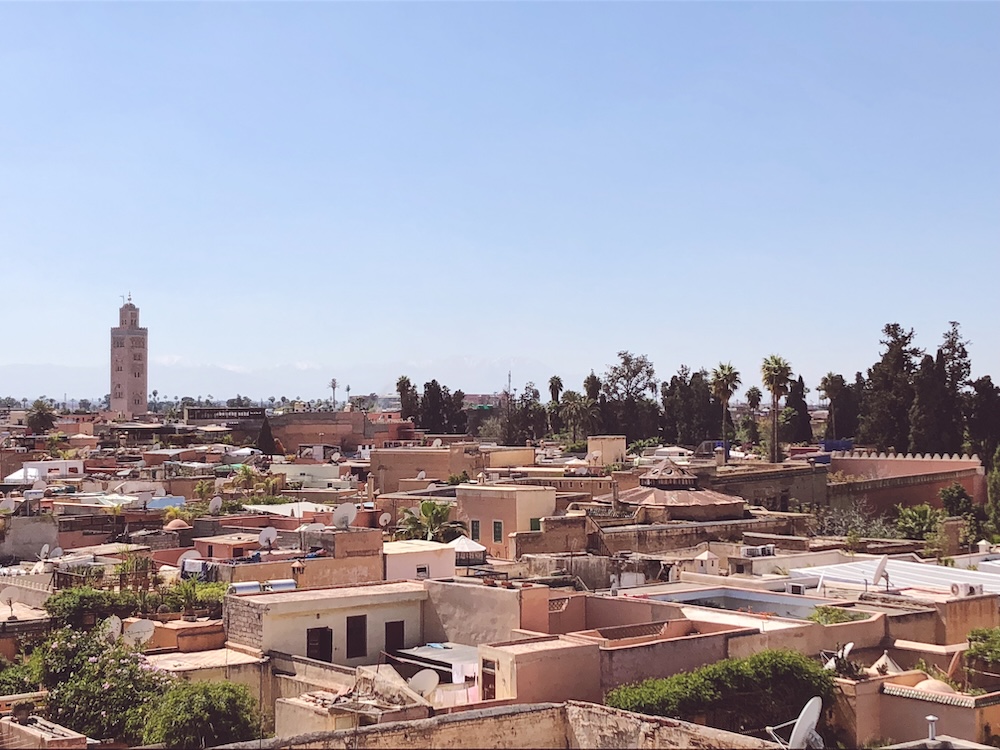
For lunch, we walk up Rue Bani Marine towards Jemaa el-Fna to no-frills spot, Snack Grand Atlas. Don’t let the touristy decor put you off: the homemade Moroccan food is superb and the portions generous. I highly recommend the chicken tagine. After, we walk a few minutes to the Koutoubia Mosque, the landmark we’ve been navigating by all week, whose 12th-century minaret has watched over Marrakech for more than 800 years.
And now, the moment I’ve been waiting for: hammam time! You can’t come to Marrakech, a city where the hammam is a centuries-old ritual, without indulging in one. We head to Le Bain Bleu, a spa in a restored riad just a few minutes’ from our riad in Mouassine, named after its blue mosaic-tiled rooms. After the steam, a vigorous scrub with black soap and a slow, quiet rest with mint tea, we float back out into the lanes.
For sunset, we climb to the roof of Kosy Bar on Place des Ferblantiers, where the tinsmiths’ lanterns hang in the square below. It’s one of the few places in the medina that serves alcohol, so we order a glass of Moroccan wine and settle in as the sky turns pink. From here, we watch the storks settle on El Badi’s walls for the night.
We end our last day with a casual dinner at Naima, one of my favourite restaurants in Marrakech, a tiny, no-frills souk restaurant with just a handful of tables, run by two women. There’s no menu: everyone gets the same chicken couscous, which arrives in one generous, steaming dish for the whole table, followed by mint tea and little homemade pastries. It’s one fixed price, around 100 dirhams each, and with so few seats, it’s worth booking ahead.
Day 6: A night in the Atlas Mountains
Marrakech is fun but after five days we are ready for a change of scenery. Much to everyone at home’s surprise, we hire a car and drive 3.5 hours into the Atlas Mountains. We soon relaxed into it, windows down and warm air rushing in, as the landscape turns almost Martian: rust-red slopes, deep ravines and Berber villages built from the same earth they stand on.
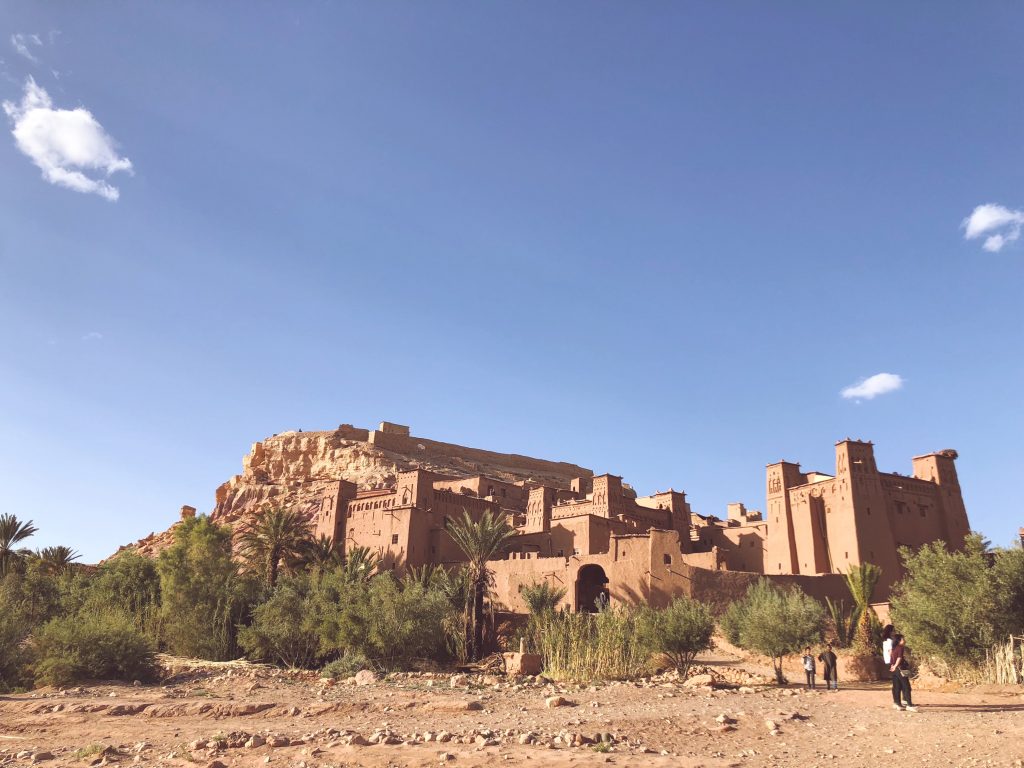
We break the journey at Kasbah Telouet, a remarkable crumbling 19th-century seat of the Glaoui family, whose rooms of carved cedar and painted tiles most people drive straight past. My jaw drops when the UNESCO-listed village of Aït Benhaddou comes into view, rising from the valley like a mirage.
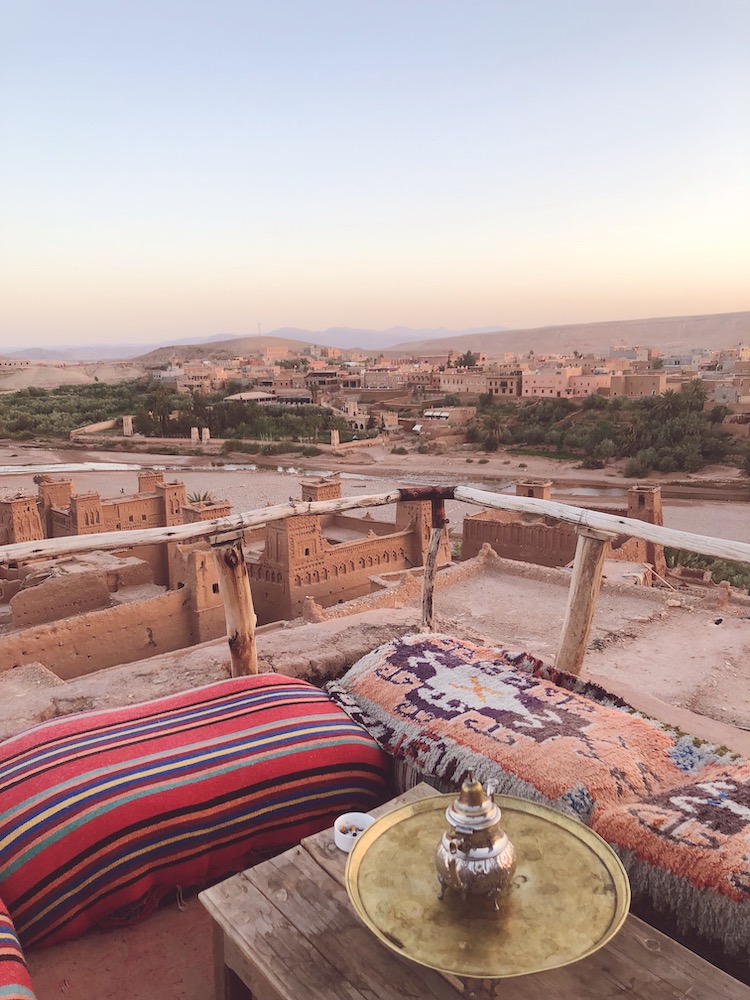
By day it’s busy with coach trips from Marrakech, but staying the night means we have it almost to ourselves once they leave. Mohammed, whose family has owned Kasbah Tebi for more than 400 years, meets us with his horse to carry our bags across the river to the old village.
Before dinner, we walk up through the terracotta lanes to the top of the village and watch the sky turn sherbet orange and pink. Then Mohammed serves a home-cooked dinner by candlelight: vegetables from the garden in a tagine, bread baked over an open fire, mint tea and fruit.

Day 7: The drive back via a desert film set
We wish we were staying longer, so reluctantly say goodbye to Mohammed and set off back towards Marrakech. But not before a 50 mile detour, to discover an abandoned film set on a lonely stretch of desert highway outside Ouarzazate, the city known as Hollywood’s door to the desert.
There, standing alone in the scrub, is Gas Haven: a sun-bleached mid-century American petrol station. Rusting cars sit on the dusty forecourt, glass bottles glint from the branches of a tree, the porch creaks and the signs rattle in the wind. It looks completely real.
It isn’t. Gas Haven is an abandoned petrol station built as a film set for the 2006 horror remake The Hills Have Eyes, with the Moroccan desert standing in for New Mexico. It has been left to the elements ever since.
I’d read that you couldn’t go inside, but when we arrive, a man is waiting outside with a key. He lets us into the diner and shop, which looks as though it was abandoned in a hurry: shelves of dust-coated soda cans, glass jars and props, all left exactly where the crew walked away.
Few visitors know it’s there, and it’s a strange, photogenic farewell to Morocco. We still make it back to Marrakech in time for our flight home.
Practical tips for your Marrakech trip
- When to go: we go in March, when it’s warm but never too hot, and Aït Benhaddou is quiet before the summer crowds. Spring and autumn are best, and it’s a perfect escape from Britain.
- Beating the crowds: get to the souks before 11am or after dark; and big attractions at opening time. Avoid mid- to late morning.
- Alcohol: many restaurants in the medina don’t serve alcohol, including Le Jardin, Café des Épices, L’Mida and Naima, so expect fresh juices, mint tea and mocktails instead. For a glass of wine, head to a licensed spot like Kosy Bar or Grand Café de la Poste in Gueliz, which has more bars and restaurants that serve drinks. Many riads will also serve you a drink on the roof, so it’s worth asking.
- Jemaa el-Fna food stalls: if you eat at any, make sure you agree prices before you order.
- Driving: a basic hire car is fine for the Tizi n’Tichka road, the winding pass over the High Atlas. Leave early and allow time for the bends.
- Getting around the medina: download an offline map, but expect to get lost. That’s half the fun.
Thanks for reading! If you enjoyed this story, would you consider buying me a coffee?


